Monday, October 14, 2019

Bullying and the Not-So-Blindside of Sport


Forms of bullying happen all the time in our society. Can happen to any gender, race, age, personality, and the list can go on forever. People bully one another because of the differences in an individual sees as not normal. Most of the bullying that has happened to me was during grade school and high school. Most of it was just verbal assaults, but when sports were introduced that’s when the physical contact would happen. This was an outlet for the violence to happen through sports like football and basketball. One time when I was in middle school, I was in gym class playing basketball and I went to drive for a layup, then a kid proceeds to try and block my shot with his elbow. This as you can guess did not end too well for me and I busted my mouth pretty good and the kid that did it thought it was funny without caring what happened to me. Meanwhile, the gym teacher did not do anything to the kid that struck me because he was on the football team. I feel like he should have used his power to do something, but did not and just sent me to the nurse’s office. My classmate had power of me because he knew he could not get in trouble because he was in sports. This act of violence was just enacted by the regular bully at a school that thinks it is cool to hurt others and be funny. Sports gave him the power to do negative things because he would not get in trouble by superiors.
Another example in middle school was with the gym teacher again. This story was when a grown put his hands on me as a 12-year-old and was using force to get me out of the classroom. I was shocked by not knowing what to do to at this moment when he aggressively put his hands on my shoulders grabbing me by the shirt. I could not believe that an adult with power in the community is trying to remove me with force. At the time I did not thing this was as serious as my mom made it out to be. I am glad I told my mom, but wish the school did more to punish this gym teacher who has been abusing his power for years. Now in present time I see how bad it is to use force as a teacher and try to remove a student from a classroom. That gym teacher was always using his power to get the better of teenage kids and boss them around. He always used the words “fag, gay, and queer” referring to kids he disliked and no one saw anything wrong with this. After this altercation, I went to live with my grandma and changed middle schools for the remainder of the year. This was a huge impact on my life because I had to start over again at another school with not knowing anyone. It was for the better and had a better impact on me. The teachers compared to my old school were so nice and actually wanted the students to enjoy coming to school. This was a life lesson that I will always have with me and that is to speak up for when bullying is happening because it has a negative impact on someone.

Bullying and the Not-So-Blindside of Sport

I don't ever recall a time in middle school or high school where I was ever physically or verbally bullied, but I can recall a time where I have actually witnessed a certain form of bullying. It was my junior year of high school and I was watching my high school's varsity girls' basketball team play. Throughout my 4 years of high school, we weren't really the best when it came to certain sports, and basketball happened to be one of them. There were about 2 minutes left in the fourth quarter and my high school was losing pretty bad. When the game was over, I remember all the girls looking sad and disappointed, which who wouldn't be after losing a game. I began walking towards their locker room because I was going to talk to a few of my friends who were on the team. As I got closer, I remember hearing a few of the senior girls saying things like, "if she wouldn't have made so many mistakes we probably could have won." I wasn't really sure what to think in this moment. These girls continued talking and proceeded to say, "she should really be on JV because we aren't ever going to win a game if she stays on the team." I could not believe what these girls were saying, and it soon became clear that they were talking about one of my friends. In that moment all I wanted to do was go up to those girls and ask them why they would ever say things like that about someone, let alone someone on their own team. There were so many other things I wanted to say to them, but just didn't have the courage to stand up for my friend, or myself. I never ended up telling my friend what those girls said about her because I didn't want to upset her, or make it seem like I was making it all up. Looking back, I wish I would have said something because nobody should get to make comments like that about someone and just get away with it. I also wish I would have spoken up because my friend deserved to hear the things said about her, regardless if it was good or bad. This type of bullying definitely represents an imbalance of power. The senior girls, based on their status and athletic ability, had the most power. My friend, not knowing what these girls were saying, and maybe not as good of a basketball player as the senior girls, had little to no power. This power imbalance is a result of these girls feeling like they are better than everyone else simply because of who they are. My friend was the target in this situation, and because she knew nothing about what was being said, she had no power to fight back.

Blog #4


Bullying is prevalent in sports at all ages on all different types of levels. As a young kid many people are bullied if they couldn’t make a shot, score a goal, or even if they didn’t make a team. As you get older the competition begins to get more serious and that makes people much more competitive.
Just last year I witnessed bullying on the basketball court by fans and players as a sophomore in college. It was a home game and the team we were playing was not very good. Since it was a home game and the other team had to travel from three hours away, our fan section outnumbered them by many. The beginning of the game was perfectly fine, good competition from both teams. However, after half time we started to extend our lead and the other team began to lose confidence. In sports, this is a time you want to capitalize and make sure the other team can’t come back. The ball was in our court (literally) and a couple of the other teams’ girls began to pick up “cheap” fouls. They were being extremely handsy when playing defense and throwing around some elbows. This caused the referees to call fouls against them and our fans and parents to get a little upset by the way we were being treated.
At this time the other team felt like they had no power because they were losing and knew they would not be able to win the game. Our team had all the power in this game and the opponents wanted to chip away at our power in anyway they could. This caused them to show bad sportsmanship. Once they began showing bad sportsmanship the cycle didn’t stop. We had a couple cheap fouls, parents yelling at referees, fans yelling at other fans, and coaches yelling at players. I could not wait for the game to be over. I, myself, felt like I handled what I was doing well. I didn’t pick up any cheap fouls out of frustration. Even one girl in the middle of the game said “HEY 13! Want to know what a black eye feels like?” at this moment I just walked away and continued playing the game. There I was actually involved in the situation and removed myself immediately. However, at the end of the game one of the girls looked at our fan section on her way into the locker room and yelled “Don’t talk sh*t to my mom and f*** all of you!” Then a couple students proceeded to yell back to her, and she went into the locker room. As a bystander in this situation, I did not do anything. I wasn’t sure what to do and didn’t want to get involved. I felt like I didn’t have much power in this situation due to the fact my team was the reason she was so upset. Instead the person who did have power stepped up. This was her coach. The coach after the game had that girl come up to all of us as we left the locker room and apologized to us and our fans. I felt that this is how the cycle truly ended between the bullying from one player to player. Now looking forward to this year, there is no beef between our two teams, and we can look for a good competitive game.
The other team reacted this way because they were losing and felt like they had no power in this situation. Even though sports do create psychological advantages for women, they do cause psychological issues. These issues can come from times of not feeling in power. In this case, no matter the score these girls felt powerless and it caused a strain on their mentality in the moment. In Women and Sports in the United States reading it talks about how there are multiple psychological effects women can feel. This can all stem from losing that power, which I feel is what the girls we were playing against felt in that moment.

Bullying and the Not-So-Blindside of Sport

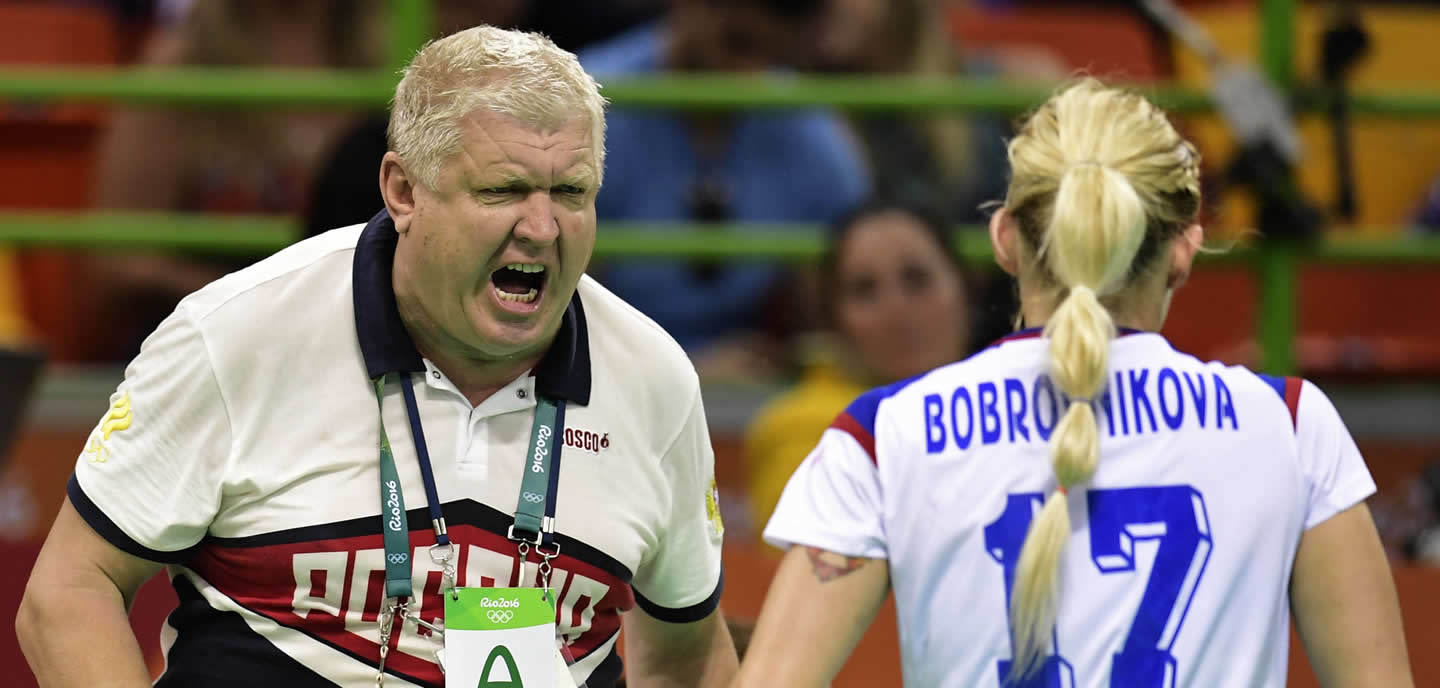
Image result for soccer players intimidating others

Back when I played soccer in high school, there was a lot going on behind the scenes that a majority of people didn't know was happening unless you were on the team. We were always looked at as one of the best teams in the state and sometimes the country, so people put us on a high pedestal. We had to work hard to get there and this put a lot of stress on people, in particular the varsity coaches and varsity players. Now, I understand that being stressed out can be tough on a person, but there is only some extent I am willing to go on what is justified or not. I only played on JV in my two years of playing soccer and so there was a lot of backlash thrown to us that weren't on the varsity team. It was worse my freshman year because I was the youngest in the program and was treated like it as well. It started right when we made the team and had practice the following week. We were treated as servants, not as teammates whatsoever. Along with every other freshman, we had to do all the dirty work for the varsity because they felt that they were in a whole other class above us and the coaches let it slide too because they believe it to be the same too. Before every practice, us freshman on JV were forced to bring all the water bottles out for the varsity players, move all the goals to the field for the varsity, and set up the field for varsity practice. This happened everyday while they did not have to rush after school to get right to the field like we did. While varsity players had the whole field to play on every single day for practice, us on JV were only allowed to use a twenty yard area of grass behind on the the goals if we were lucky. Some days we weren't even privileged with that and we had to play in the outfield of out baseball field with the grass being very high because they weren't in season. After the first few days we felt out worth to the team and it was tough to deal with sometimes. It didn't even end there, for games we had to do even more work for the varsity. If we had a home game, the JV freshman were required to line the field every afternoon for the varsity, set up the corner flags, get the audio system working for the speakers, and much more work that took a lot of time and effort.  If we had to go on the bus for an away game, JV had to bring that bags of balls for varsity, we had to fill up their water bottles and bring them on the bus, and while each varsity player had their own seat on the bus, every JV player had to double and triple up on seats. Sometimes if we had a lot of equipment to bring on the bus, some players had to sit in the isle between the seats because a varsity player wouldn't let us sit next to them. It bewilders me that the coaches allowed this to happen and not rationed the work out equally and I still can't think of any rational explanation as to why they didn't. The high egos of the staff and players seem to have brought this situation alive in my opinion and I don't see this ending anytime soon in the program as long as we stay a powerhouse in the sport. Some may consider this a price to pay to enter a great program, but the endless demoralization brought upon some players got really tiring after some time.

Sunday, October 13, 2019

Bullying and the Not-So-Blindside of Sport


Throughout my life, soccer has been my main involvement and biggest interest in sport, however in high school my team was not considered the best team in the conference. We have lost many games either that be by one point or multiple, but it wasn’t always about winning because I have made some life-long friends, cherished memories, and some new soccer skills/tricks.

It was my senior year in high school and it also was my 4th year on the West High School varsity soccer team. My team and I had been playing at home against one of the two Dubuque teams in our conference on a Thursday night. During this game, I had been playing forward and once the game had reached the second half, we had been losing by three goals. During the second half, I had been at half field while standing in front of two defenders from the other team. One of the girls was a thin, tall, and had light brown hair with the most beautiful curls coming out from her wrapped up bun. The other girl was thin, short, and had short black hair wrapped up in a ponytail. They were very pretty, but they became very ugly quick with their negative comments. Both had been talking behind me; however, it had been specifically one of the defenders was doing all the talking and the other defender had been participating while listening and nodding her head in agreement. She would say stuff like, “this game is gonna be over soon because this team is so bad” or “gosh this team sucks.” She continued to talk negatively about my team and I as if I was not in front of her listening to every word. The game had shortly ended after that and I started to walk towards my bag avoiding the line to shake hands and appraising a good game to each player. However, my coach had noticed, and she called for me to come over, but I told her no. My coach had marched up to me and ordered me to be a good sport as she pointed her finger over to the line of players. It was embarrassing, but I did as I was told while not saying a word to any of the players. After our end of the game pep talk as a team, my coach had approached me to discuss what had happened. My coach became furious and then approached the head coach of the other team as the junior varsity game had been going on. I am not sure what had happened after that but, I believe both of those girls were acting and participating in a form of bullying. I am not sure if both those girls continued to behave in that manner, however my coach approaching the other head coach was acting in a higher power to cease the incident.

Therefore, there has been an imbalance of power as the players from the team had the higher power being the winning team and possible having more talented players presenting as a stronger team in this case. As for my team, we were the individuals whose power was being attacked or chipped away because we were not considered a talented team as reflected by the ending score of the game. The imbalance had been created due to the opposing team believing they had been better than my team. In fact, “athletic competition can increase self-confidence and self-esteem or, quite the very opposite, lead to confusion, doubt, and emotional pain” (p. 67).

The sports that I have been involved in have always had some sort of bullying either that be hazing, harassment, and keeping an individual out of a group, all which I have either witnessed or experienced myself. Unfortunately, bullying will continue throughout time, but speaking up or having a voice helps those who have no courage to defend for themselves in the end. However, I am one of those people who did not have a voice and had let the bullying continue while not speaking up for myself to put a stop to it while expressing a lower power acting as a bystander that could have made a difference by asking the other players to stop. However, I am reflecting from my mistakes to learn and become a person with a voice in the end. 


References:

Schultz, J., OReilly, J., & Cahn, S. K. (2019). Women and sports in the United States: a

documentary reader. Hanover, NH: Dartmouth College Press.

Friday, October 11, 2019

No Safe Space


I wasn’t always strong and confident in myself. All of grade school and junior high, I was bullied. It got so bad that my mom almost pulled me out of the public-school system and homeschooled me. I instead ended up switching to a different high school when that time came around, but a lot of damage had already been done. The bullying happened mainly during school. Mean words from mean girls, and occasionally physical abuse. I never said or did anything back, just took it. Sports were my safe space, or so I thought. Because of my height, I excelled at volleyball and track. I thought that in these settings, the girls wouldn’t be mean to me because I was a teammate that helped them win. I was wrong.
To give a little background information on the scenario I’m about to describe – I have celiac disease and I’m very allergic to gluten. A crumb and I get sick for weeks, if it touches my skin or I breathe it in I get sick for weeks. During the school day this affected me greatly during lunch period in grade school. Multiple times, the group of the popular girls would come up to me, shove me, say a few mean words making fun of me for packing a lunch every day instead of eating the school’s lunch like everyone else, and then throw my food away. I used to eat my lunch in a bathroom stall to avoid this from happening. Once I got to junior high, one day my science teacher saw me eating in the bathroom and prompted me to explain the situation to her. For the rest of junior high, I ate my lunch every day in the science teacher’s supply closet to avoid an opportunity for them to bully me. The bullying happened at recess too, so I would skip that and instead read a book or do homework in the bathroom/science teacher’s closet. During school, I did not feel safe or welcome at all. Sports were my escape from bullying. Until one day, there weren’t.
Gluten is in more than just food. I have to use gluten free make up, shampoo, conditioner, perfume, etc. Since perfume has gluten, when girls on the volleyball team would spray it in the locker room after games, I would get sick. I had to miss school and games because of the reaction my skin had as well as the reaction my stomach had. The volleyball coach addressed this to the girls, and asked them to wait to spray their perfume until I was finished changing and could leave the locker room. I fully believe up to this point, they had no idea they were making me sick with the perfume. After some of the girls were made aware of this however, things took a turn for the worst. After the next practice they walked up to me, sprayed their perfume in my face, and walked away laughing. It seems like a minor thing to happen, perfume seems harmless, but I am very allergic to gluten. My face swelled shut and I couldn’t open my eyes after this happened, and I had to miss our regional game. This was the moment I realized that no space was safe. Not even sports were safe anymore. After this year, I transferred schools and things got a lot better for me.
This bullying was a result of an imbalance of power. The popular girls, based on their status, had the most power. Me being a girl who was not very popular at school, having little to no self-confidence, made me an easy target. This power imbalance is a result of these girls feeling more privileged than me, believing that they’re better than me simply because they are who they are and I am who I am. They needed no further reasoning than that, just as the men needed no further reasoning to question and bully DiCario as a reporter simply because she was a woman (2016/2019, 369). This situation existed on the basis of the mentality that their lives are worth more than mine. That because I was not as attractive as them, because I was weak, shy, and nerdy, I deserved to be treated less than them. That is how this situation was created, and honestly, I feel like I am at fault for why this situation was maintained. I never stood up for myself. I never said or did anything to stop them. Instead, I hid. Instead, I came home crying. If I had stood up for myself, the cycle would not have persisted as long as it did, and I would not have been left as damaged as I am. My role in this situation was the target, and because of the way I let them treat me, I had little to no power over anything.


References:
DiCaro, J. (2019). Women in the sports media face unrelenting sexism in challenges to their expertise and opinions. In S. Schultz, J. O'Reilly, and S.K. Cahn (Eds.), Women and sport in the United States: A documentary reader (pp.367-371). Lebanon, NH: Dartmouth College Press. Previously published from Women's Media Center, (2016, April 30). http://www.womensmediacenter.com/speech-project/women-in-sports-media-face-unrelenting-sexism-in-challenges-to-their-expertise-and-opinions

Thursday, October 10, 2019

Bullying and the Not-So-Blindside of Sport


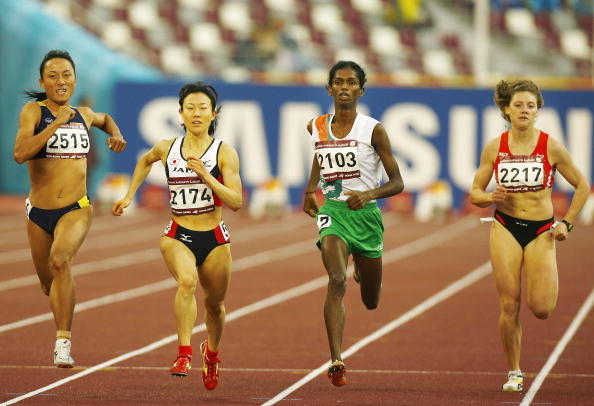
Santhi Soundarajan in 2006 Asian Games
The past unit's readings begin to help us examine the historical marginalization of women's athletic bodies who fail to ascribe to the traditional notions of Judith Butler's heterosexual matrix.  Nude parades, Barr Body testing, and today's testosterone testing reinforce and reconstruct social norms related to assigned sex and gender.  Sports studies scholars argue that these practices continue to codify sport, and particularly, elite performances with sport, as male and masculine.  Consider that no men  have ever been subject to such biological scrutiny by the International Olympic Committee or the International Federation of of Amateur Athletics (not even when they fall ill or come in last place).  I would argue that this is a form of structural bullying, that sportswomen unfairly continue to endure.  Of course bullying in sport can rear its nasty head in many ways that are defended and protected by players, coaches, and a variety of other structural gatekeepers: hazing, hate speech, homophobia, and sexual assault are far too prevalent in both sports for men, women, teens, and children (Frazier, 2001/2019; Griffin, 1992/2019).

Our current cultural discussions around bullying are typically related to school-aged children.  Stopbullying.gov, defines this practice as, unwanted, aggressive behavior among school aged children that involves a real or perceived power imbalance. The behavior is repeated, or has the potential to be repeated, over time. Bullying includes actions such as making threats, spreading rumors, attacking someone physically or verbally, and excluding someone from a group on purpose.

Steubenville, OH
Perhaps my use of conceptualization of sex testing in sports is a bit outside of the box in today's child-centered conversations.  Despite this, there's something going on here, and that something is a power play of sorts.  Julie DiCaro hints at in her discussion of the type of cyber-harassment that herself and other women in sport media brace themselves for regularly (2016/2019, 369).    Whether we consider bullying from the perspective of children in schools, locker rooms, the adult workplace, or even residence halls at SAU, we'd be fools not to critically examine the diffuse and dynamic nature of power.  It's not just a matter of a survivor and aggressor.  There are structures, perhaps people who  suspect and do nothing, under report, or turn the "blind eye" (to use an ableist metaphor) to the situation(s).  Sayreville High SchoolSteubenville High SchoolPenn State University, and a litany of other athletic institutions have utterly failed to protect our young people, our most vulnerable populations, and in many ways, our humanity from blatant imbalances in interpersonal and institutional power. 

This week, I'd like you to reflect on a time from your youth (or maybe more recently), where you witnessed, experienced, or participated in a form of bullying in sport, physical education, or some other setting within physical culture.  If this seems unclear to you, visit stompoutbullying.org for a great overview of the physical, verbal, and relational bullying that can occur in sport.  Provide some context to the situation and examine the imbalance of power.  It is important the you identify who had the most power and whose power was being attacked or chipped away at.  How might you describe such an imbalance?  Why did it exist in the first place?  How or why was this situation created? Maintained?  How did the cycle cease (if it did at all)?  Be sure to show rather than tell.  Last, I'd like for you to identify your role and the level of power that you possessed in this incident.  Were you a bystander that could have made a difference?  This is not meant to be indicting, rather a moment to reflect and learn from.  Limit your entry to 500-750 words and be sure to include an image or video related to your post.  Please  note that this may trigger powerful emotions or cause you to re-experience past pain and trauma.  If this is the case please contact me immediately.  If you feel you need further assistance, please do not hesitate to contact Counseling Services at 563/333-6423 or your Residence Hall Director.

As a Green Dot Etc. violence prevention instructor, I'd like to think that I'm always "on it."  Let me share a brief story that occurred within the last six months.  I truly wish I had responded differently, more quickly, and more, well, like the Dr. E that I like to see myself as.  Gulp... here goes nothing.
Image result for Cascade + skating
Friday is for fires.  For a long time, I didn't teach much on Fridays.  Each Friday, I still came to SAU and tend to the fires from my teaching week.  Put a few out, fan a few flames, start a new one.  It's part of the rhythm of what was a four-day teaching schedule. Throw eating a Rogo quesadilla in there and that's my day.  A lot of catch up and a few chuckles with colleagues or students who come in for office hours.  The night is mine.  After dinner, my partner and I travel to our localroller rink and enjoy jamming, skating the oval, and practicing new toe work on our quad skates.  It's a great way to unplug from work with whatever hot garbage top 40 they are playing (you know, I Like It, Breathin, Sunflower, Love Lies ).  We burn some calories, relax a bit, and maybe reconnect over Checkers twist cones or watch Real Time With Bill Maher or a new episode of Nailed It or Great British Bake Off.  At the rink, we're old (it's all relative).  Usually we're the only pair of adults without kids, but we're a fixture, and we love checking in with the young people who are there.  The rink guards are typically pretty young, 16-21, and the young teens, tweens, and young kinds think the guards are the coolest.  Growing up at a pool, the rink guards are the rolling versions of the lifeguards that I worshiped.  Last spring, one of the regulars, an 8th grader named Taylor (pseudonym) was very excited to tell me about some more "boy drama."  As usual, I braced myself and tried to feign interest preparing to remind her about focusing her energy on our own talents and other not cool things you would say to a boy-crazed eighth grader.  This time it was something about one of the rink guards.  A seventeen year old, who happened to have previously dated one of Taylor's cousins.  Oh the drama!  Taylor and the guard had been regularly chatting via Messenger.  Kind of a lot.  It seemed odd to me initially, but I assumed it would cool down.  This particular visit, Taylor was very upset that the guard was using the ap to communicate his disgust with Taylor's cousin for breaking up with him before prom.  Fast forward, to me learning and seeing some of the language that was tacking back and forth between this thirteen-year-old girl and seventeen-year-old's phone.  I was incensed!  Before I could even process it, she had rejoined some friends.  I skated the oval and briefly discussed it with my partner.  We determined it was probably a good idea to talk with the manager if not the guard himself.  Neither were there that night, or the next time we visited.  The drama must have died down, because it never came up again.  Six months later, I eventually mentioned it to the owner's wife after she told me about a crop of new hires.  That rink guard is long gone, but he skates there occasionally I still gristle when I see him flirt with the young girls.  I know he is young, but at this age, he has power over them.  I watched many friends fawn and fall over older boys.  Was this bullying?  What it was, was abusive and inappropriate.  I wish I could go back in time and do more than tell Taylor to block him for a week.  I didn't handle that fire right at all, and I know that the next time I see a near adult interacting with a junior-high aged person, I won't skate by.

References:

DiCaro, J. (2019). Women in the sports media face unrelenting sexism in challenges to their experise and opinions. In S. Schultz, J. O'Reilly, and S.K. Cahn (Eds.), Women and sport in the United States: A documentary reader (pp.367-371). Lebanon, NH: Dartmouth College Press. Previously published from Women's Media Center, (2016, April 30). http://www.womensmediacenter.com/speech-project/women-in-sports-media-face-unrelenting-sexism-in-challenges-to-their-expertise-and-opinions 

Frazier, I. (2007). On the rez. (2007)In Schultz, J. O’Reilly, J. and Cahn, S.K. (Eds.), Women and sport in the United States: A documentary reader, 2nd ed (pp. 325). Hanover, NH: Dartmouth University Press. Excerpt from Frazier, I. (2001). On the Rez.  New York City, NY: Picador.

Griffin, P.  (2007). Changing the game: homophobia, sexism, and lebians in sport. In Schultz, J. O’Reilly, J. and Cahn, S.K. (Eds.), Women and sport in the United States: A documentary reader, 2nd ed (pp. 234-253). Hanover, NH: Dartmouth University Press Previously published in Quest 44 (1992), 251-265.

Hansen, C. (2007). Sex, lies and volleyball. In O’Reilly, J. and Cahn, S.K. (Eds.), Women and sport in the United States: A documentary reader (pp. 246-257). Boston, MA: Northeastern University PressPreviously published in  Chicago 45:2 (1996), 56-63.